
Call us now :08045800678
 Send Inquiry
 Send Inquiry
Liquid Thiophosgene
MOQ : 100 Bottles
Liquid Thiophosgene Specification
- Physical Form
- Liquid
- Refractive Rate
- nD20 1.550
- CAS No
- 463-71-8
- Storage
- Store in tightly closed containers under inert atmosphere, keep away from water and moisture, in a cool dry place
- Purity
- 99%
- Poisonous
- YES
- Grade
- Industrial
- Usage
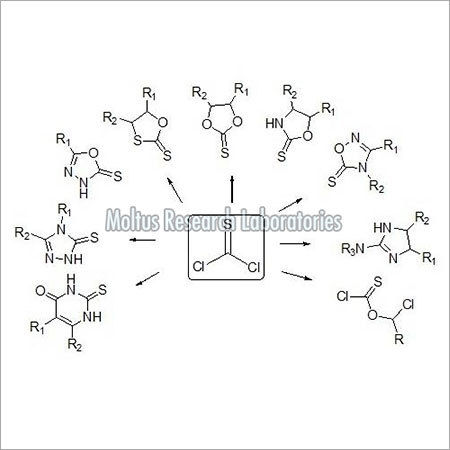
- Used for converting amines to isothiocyanates, as a reagent in organic chemistry
- Shape
- Liquid
- Product Type
- Chemical
- Smell
- Pungent, irritating odor
- Properties
- Highly toxic, colorless to pale yellow liquid, lachrymatory agent
- EINECS No
- 207-336-1
- Molecular Weight
- 114.99 g/mol
- Melting Point
- -12 C
- Structural Formula
- Cl2CS
- Shelf Life
- 24 months
- Molecular Formula
- CSCl2
- Appearance
- Clear to pale yellow liquid
- HS Code
- 29201990
- Density
- 1.58 Gram per cubic centimeter(g/cm3)
- Ingredients
- Thiophosgene (CSCl2)
- Solubility
- Insoluble in water, soluble in organic solvents (ether, benzene)
- Application
- Organic synthesis, chemical intermediate
- Vapor Pressure
- 18 mm Hg (at 20°C)
- Transport Conditions
- Transport as per hazardous goods guidelines
- Flash Point
- None (does not burn easily)
- Compatibility
- Incompatible with water, strong oxidizers, bases
- Hazard Class
- 6.1 (toxic substance)
- UN Number
- UN 2413
- Regulatory Information
- Subject to local and international transport regulations
- Handling Precautions
- Use only in fume hood; personal protective equipment recommended
- Boiling Point
- 118 °C
- Decomposition Products
- Hydrogen chloride, sulfur dioxide
- Packaging Type
- Sealed glass bottles, metal drums
- Environmental Hazards
- Very toxic to aquatic life
Liquid Thiophosgene Trade Information
- Minimum Order Quantity
- 100 Bottles
- Supply Ability
- 1000 Bottles Per Week
- Delivery Time
- 3-10 Days
About Liquid Thiophosgene
By utilizing skills of our dexterous workforce, we are manufacturing and exporter a broad assortment of Liquid Thiophosgene. It is a molecule with trigonal planar geometry and a red liquid with the formula CSCl2. To be used in diverse organic compounds, there are two reactive bonds. Further, we are supplying the safe and pure Thiophosgene at market leading prices.
Other Details :
Other Details :
- CSCl2 is prepared in a two-step process from carbon disulfide. In the first step, carbon disulfide is chlorinated to give trichloromethanesulfenyl chloride, CCl3SCl.
- CS2 + 3 Cl2 a + CCl3SCl + S2Cl2
- The chlorination must be controlled as excess chlorine converts trichloromethanesulfenyl chloride into carbon tetrachloride.
- Steam distillation separates the trichloromethanesulfenyl chloride, a rare sulfenyl chloride, and hydrolyzes the sulfur monochloride.
- Reduction of trichloromethanesulfenyl chloride produces thiophosgene : CCl3SCl + M a + CSCl2 + MCl2
Specifications
| CAS NO | 463-71-8 |
| Molecular Formula | CSCl2 |
| Molecular Weight | 114.98 |
| Physical Appearance | Red Burgundy Colour |
| Purity | NLT 95% |
| Packing | 3.75 Kg Glass Bottle & 30 Kg PTFE Coated SS Drums |
Applications and Uses
Liquid Thiophosgene finds significant utility in organic synthesis, especially for converting amines to isothiocyanates and as a versatile reagent in the preparation of chemical intermediates. Its unique reactivity makes it indispensable for certain complex organic transformations performed under controlled laboratory conditions.
Safe Handling and Storage
Due to extreme toxicity and incompatibility with water, Liquid Thiophosgene should always be manipulated in a well-ventilated fume hood, using appropriate personal protective equipment (PPE). Storage must be in tightly sealed containers under inert atmosphere, shielded from moisture and heat, ensuring a long shelf life of up to 24 months.
Regulatory and Environmental Considerations
Classified under Hazard Class 6.1 and bearing UN 2413, the substance is subject to strict local and international transport regulations. It is extremely dangerous to aquatic life, and rigorous measures are mandated for its transportation and disposal to minimize environmental hazards.
FAQs of Liquid Thiophosgene:
Q: How should Liquid Thiophosgene be handled and stored safely?
A: Liquid Thiophosgene must be handled only in a fume hood wearing suitable personal protective equipment. Store it in tightly sealed glass bottles or metal drums under an inert atmosphere. Keep it away from moisture, water, and sources of heat, in a cool, dry place.Q: What are the primary industrial applications of Liquid Thiophosgene?
A: Liquid Thiophosgene is mainly used in organic synthesis for converting amines to isothiocyanates and as a reagent in chemical intermediate production. Its role is vital in specific laboratory and industrial settings.Q: When is Liquid Thiophosgene considered hazardous or restricted?
A: Liquid Thiophosgene is classified as Hazard Class 6.1, signifying its extreme toxicity. It is regulated under UN Number 2413 and subject to stringent local and international transport and usage regulations due to health and environmental dangers.Q: Where should Liquid Thiophosgene be stored to ensure longevity and safety?
A: This compound should be kept in tightly closed containers, stored under an inert atmosphere, away from water and strong oxidizers, preferably in a designated chemical storage facility that maintains a cool, dry environment.Q: What is the process for safe transportation of Liquid Thiophosgene?
A: Transportation must comply with hazardous goods guidelines, including the use of sealed packaging, clear labeling with UN 2413, and adherence to both local and international regulations to avoid leaks, exposure, or environmental harm.Q: Why is using Liquid Thiophosgene beneficial in organic synthesis?
A: Its chemical properties allow for efficient conversion of amines to isothiocyanates and facilitate other unique transformations, making it a valuable reagent for advanced organic synthesis tasks that require specific reactivity.Q: What environmental precautions should be taken with Liquid Thiophosgene?
A: Since it is highly toxic to aquatic life, any spills or disposal must be managed according to hazardous chemical regulations. Avoid releases to the environment to prevent ecological harm and inform relevant authorities in case of accidental leakage.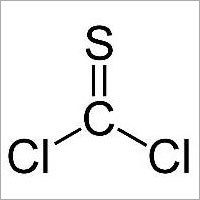
Tell us about your requirement

Price:
Quantity
Select Unit
- 50
- 100
- 200
- 250
- 500
- 1000+
Additional detail
Mobile number
Email

More Products in Thiophosgene Category
Thiophosgene
Minimum Order Quantity : 100 Bottles
Appearance : Red liquid
HS Code : 29309099
Molecular Weight : 114.98 g/mol
Structural Formula : Cl2C=S
Melting Point : 29 C

 Send Inquiry
Our Products
- Piperazine Derivatives
- Thiophosgene
- Methyl 4 - Chlorobutyrate
- 4 - Chlorobutyryl Chloride
- Suberic Acid
- Chloroacetic Anhydride
- Methyl 6 - Methylnicotinate
- Benzoyl Isothiocyanate
- Aziridine
- Malonate Derivatives
- Bithionol Sulfoxide
- 1-(3-Dimethylaminopropyl)-3-ethylcarbodiimide EDC
- Cyanogen Bromide
- 1 1-Thiocarbonyldiimidazole
- 4-Isothiocyanato-2-(trifluoromethyl) Benzonitrile
- Beta Naphthol Thio Chloroformate
- Phenyl Thiochloroformate
- Phenyl Isothiocyanate
- 4-Isothiocyanatophenol
- 2,6-Dimethylphenyl Isothiocyanate
- 4-Chlorophenyl Chlorothionoformate
- 4-Fluorophenyl Chlorothionoformate
- Pentafluorophenyl Chlorothionoformate
- Benzyl Isothiocyanate
- Cyclopropyl Isothiocyanate


N-59, TARAPUR, TARAPUR MIDC, BOISAR, PalgharBoisar - 401501, Maharashtra, India

Mr. Saurabh Singh
(Proprietor)
Mobile :08045800678
 Send Inquiry
 Send SMS
 Call Me Free
Developed and Managed by Infocom Network Private Limited.


