
Call us now :08045800678
 Send Inquiry
 Send Inquiry
Thiophosgene
MOQ : 100 Bottles
Thiophosgene Specification
- Application
- Intermediate for organic synthesis, pharmaceuticals, agrochemicals
- Density
- 1.520 Gram per cubic centimeter(g/cm3)
- Storage
- Store in tightly closed container, in a cool, dry, well-ventilated area away from incompatible substances
- Shape
- Liquid (no definite shape)
- Shelf Life
- Stable under recommended storage conditions
- Solubility
- Low solubility in water, soluble in organic solvents
- Smell
- Pungent, suffocating odor
- Structural Formula
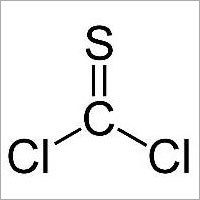
- Cl2C=S
- CAS No
- 463-71-8
- Appearance
- Red liquid
- Properties
- Highly reactive, used as a reagent in organic synthesis; volatile and toxic; lachrymatory compound.
- Physical Form
- Liquid
- Taste
- Not to be tasted (toxic and hazardous)
- EINECS No
- 207-339-9
- Purity
- 98%
- Molecular Formula
- CCl2S
- Poisonous
- YES
- Melting Point
- -29 C
- HS Code
- 29309099
- Usage
- Used in the preparation of isothiocyanates, dithiocarbamates, and other sulfur-containing compounds
- Refractive Rate
- n20/D 1.575 (literature)
- Grade
- Technical, Laboratory Grade
- Ingredients
- Thiophosgene (CCl2S)
- Molecular Weight
- 114.98 g/mol
- Product Type
- Chemical Compound
- Stability
- Stable under recommended storage conditions; decomposes in presence of water or humid air
- Packing Group
- I
- UN Number
- 2692
- Vapor Pressure
- 124 mmHg at 25 C
- First Aid Measures
- Immediate medical attention required in case of exposure; avoid inhalation and skin contact; use protective equipment
- Incompatibility
- Avoid contact with water, alcohols, amines, and strong bases
- Transport Information
- Transported as a hazardous material under ADR/RID/IMDG/IATA regulations
- Handling Precautions
- Wear suitable protective clothing, gloves, and eye/face protection; use only in a chemical fume hood
- Environmental Hazard
- Dangerous to the environment; do not allow to enter drains or watercourses
- Hazard Class
- 6.1 (Toxic substances)
- Boiling Point
- 70 C
- Flash Point
- Non-flammable, but decomposes above 70 C
Thiophosgene Trade Information
- Minimum Order Quantity
- 100 Bottles
- Supply Ability
- 1000 Bottles Per Week
- Delivery Time
- 3-10 Days
About Thiophosgene
Other Details :
- There are two reactive ccl bonds that allow Thiophosgene to be used in diverse organic compounds.
- CSCl2 is prepared in a two-step process from carbon disulfide. In the first step, carbon disulfide is chlorinated to give trichloromethanesulfenyl chloride, CCl3SCl:
- CS2 + 3 Cl2 CCl3SCl + S2Cl2
- The chlorination must be controlled as excess chlorine converts trichloromethanesulfenyl chloride into carbon tetrachloride.
- It is a molecule with trigonal planar geometry and a red liquid with the formula CSCl2.
- Reduction of trichloromethanesulfenyl chloride produces thiophosgene : CCl3SCl + M CSCl2 + MCl2
- Steam distillation separates the trichloromethanesulfenyl chloride, a rare sulfenyl chloride, and hydrolyzes the sulfur monochloride.
Specifications :
| CAS NO | 463-71-8 |
| Molecular Formula | CSCl2 |
| Molecular Weight | 114.98 |
| Physical Appearance | Red Burgundy Colour |
| Purity | NLT 95% |
| Packing | 3.75 Kg Glass Bottle & 30 Kg PTFE Coated SS Drums |
Key Properties and Applications
Thiophosgene is a toxic, reactive liquid with a boiling point of 70C and a density of 1.520 g/cm3. It is mainly used as an intermediate in organic synthesis, particularly for producing isothiocyanates and other sulfur-based compounds vital in pharmaceuticals and agrochemicals. Its high purity and reactivity make it valuable for laboratory and industrial processes.
Safe Handling and Storage
Due to its high toxicity and volatility, thiophosgene requires strict safety protocols. Always work within a chemical fume hood and wear appropriate protective clothing, gloves, and eye protection. The compound should be stored in sealed containers in cool, dry, and well-ventilated areas, away from water and incompatible substances like alcohols, amines, or strong bases, to maintain stability.
Environmental and Regulatory Concerns
Thiophosgene is classified under Hazard Class 6.1 (toxic substances) and is environmentally hazardous. It must not enter drains or watercourses. Transportation of thiophosgene must comply with international regulations (ADR/RID/IMDG/IATA), and first-aid measures should be promptly employed in the event of accidental exposure.
FAQs of Thiophosgene:
Q: How should thiophosgene be handled and what safety measures are recommended?
A: Thiophosgene must be handled only in a chemical fume hood while wearing protective clothing, gloves, and eye or face protection. Avoid all contact with the skin and eyes and never inhale vapors. Immediate medical attention is required in case of exposure.Q: What are the main applications and benefits of using thiophosgene in the laboratory or industry?
A: Thiophosgene is predominantly used as a reagent for synthesizing isothiocyanates, dithiocarbamates, and other sulfur-containing chemicals. Its high reactivity and purity are crucial for producing pharmaceutical intermediates and agrochemicals efficiently.Q: When and where should thiophosgene be stored to ensure stability and safety?
A: This compound should be stored in a tightly closed container, situated in a cool, dry, and well-ventilated area away from incompatible substances such as water, alcohols, amines, and strong bases. Following recommended storage conditions preserves thiophosgenes stability and minimizes risk.Q: What is the correct process for transporting thiophosgene?
A: Thiophosgene is transported as a hazardous material under international regulations such as ADR, RID, IMDG, and IATA. Ensure proper labeling, use approved packaging (Packing Group I), and follow country-specific guidelines for safe shipment.Q: How is thiophosgene hazardous to the environment, and what precautions are needed?
A: Thiophosgene is highly toxic to the environment and should never be allowed to enter drains or watercourses. All handling and disposal should comply with environmental and safety guidelines to prevent contamination and exposure.Q: What should be done in case of accidental exposure to thiophosgene?
A: Seek immediate medical assistance. Move the exposed person to fresh air if inhaled and avoid further contact. Decontaminate the affected area with copious water and remove contaminated clothing, ensuring that responders wear suitable protective gear.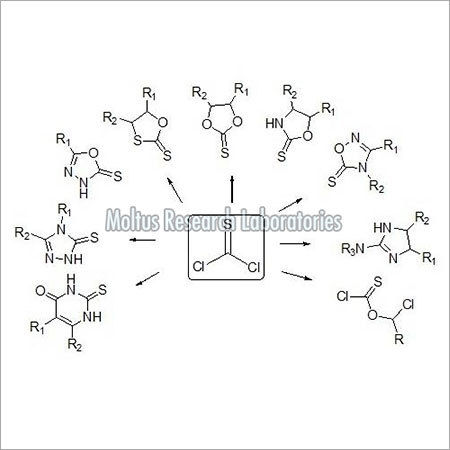
Tell us about your requirement

Price:
Quantity
Select Unit
- 50
- 100
- 200
- 250
- 500
- 1000+
Additional detail
Mobile number
Email

More Products in Thiophosgene Category
Liquid Thiophosgene
Minimum Order Quantity : 100 Bottles
Ingredients : Thiophosgene (CSCl2)
Molecular Weight : 114.99 g/mol
Product Type : Chemical
Refractive Rate : nD20 1.550
Grade : Industrial

 Send Inquiry
Our Products
- Piperazine Derivatives
- Thiophosgene
- Methyl 4 - Chlorobutyrate
- 4 - Chlorobutyryl Chloride
- Suberic Acid
- Chloroacetic Anhydride
- Methyl 6 - Methylnicotinate
- Benzoyl Isothiocyanate
- Aziridine
- Malonate Derivatives
- Bithionol Sulfoxide
- 1-(3-Dimethylaminopropyl)-3-ethylcarbodiimide EDC
- Cyanogen Bromide
- 1 1-Thiocarbonyldiimidazole
- 4-Isothiocyanato-2-(trifluoromethyl) Benzonitrile
- Beta Naphthol Thio Chloroformate
- Phenyl Thiochloroformate
- Phenyl Isothiocyanate
- 4-Isothiocyanatophenol
- 2,6-Dimethylphenyl Isothiocyanate
- 4-Chlorophenyl Chlorothionoformate
- 4-Fluorophenyl Chlorothionoformate
- Pentafluorophenyl Chlorothionoformate
- Benzyl Isothiocyanate
- Cyclopropyl Isothiocyanate


N-59, TARAPUR, TARAPUR MIDC, BOISAR, PalgharBoisar - 401501, Maharashtra, India

Mr. Saurabh Singh
(Proprietor)
Mobile :08045800678
 Send Inquiry
 Send SMS
 Call Me Free
Developed and Managed by Infocom Network Private Limited.


